Tanka Tales: Thread as Archive
In collaboration with women artisans from Pakistan
Hand embroidered thread and hand-cut mirrors on fabric
2025-2026
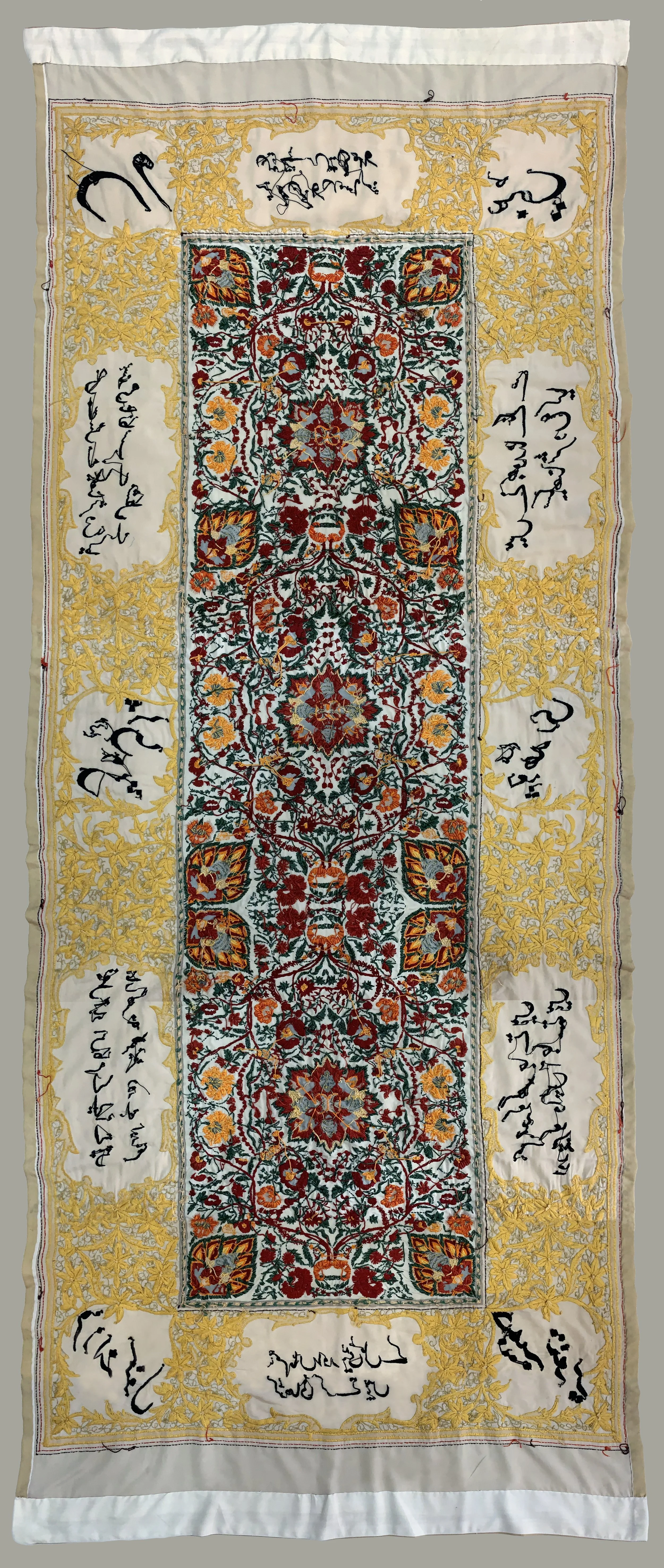
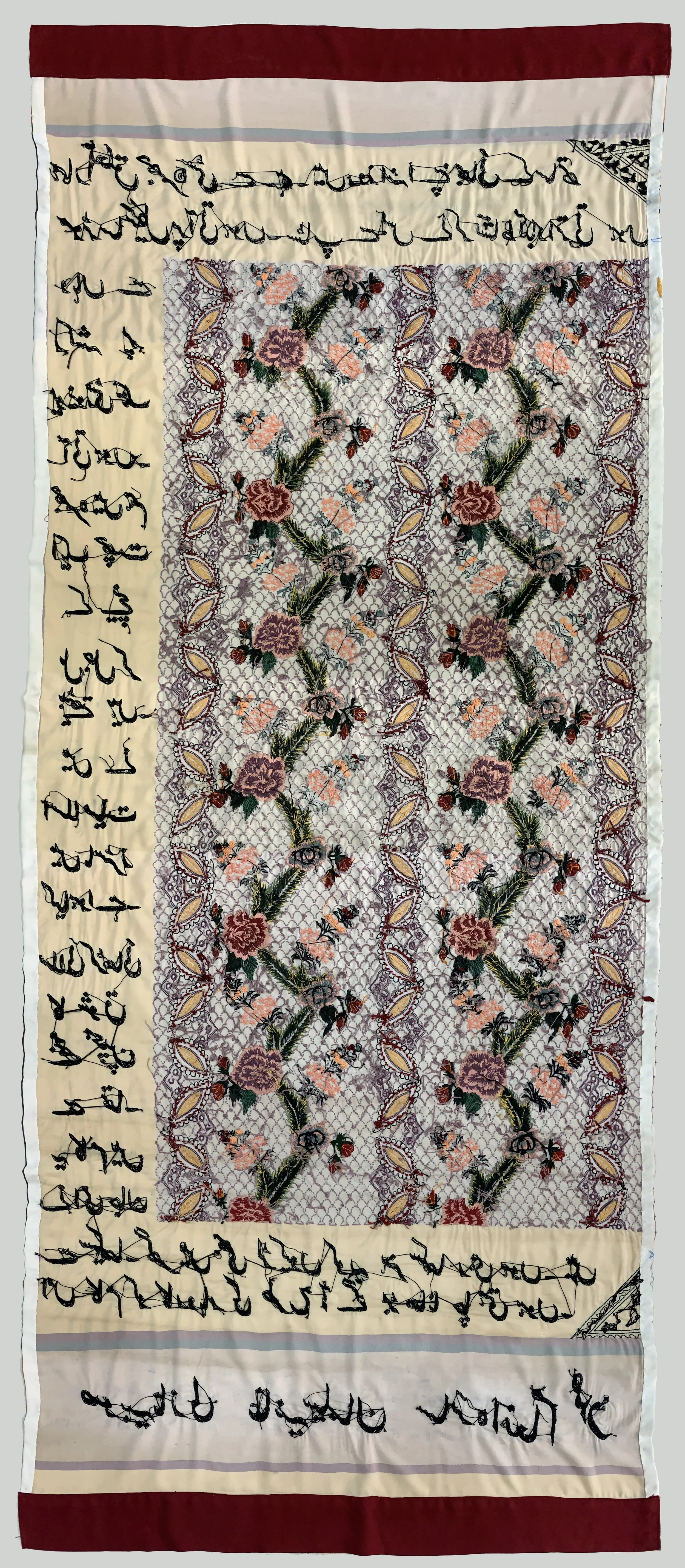
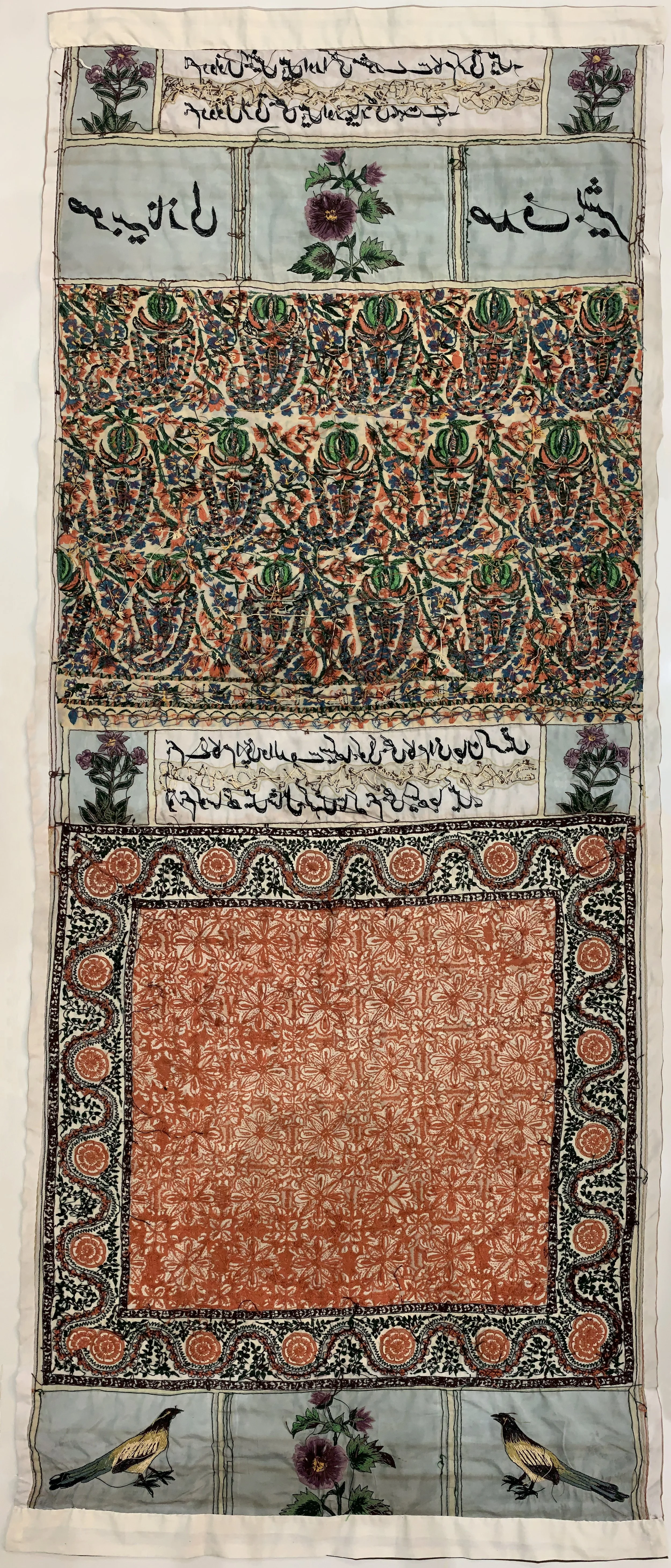
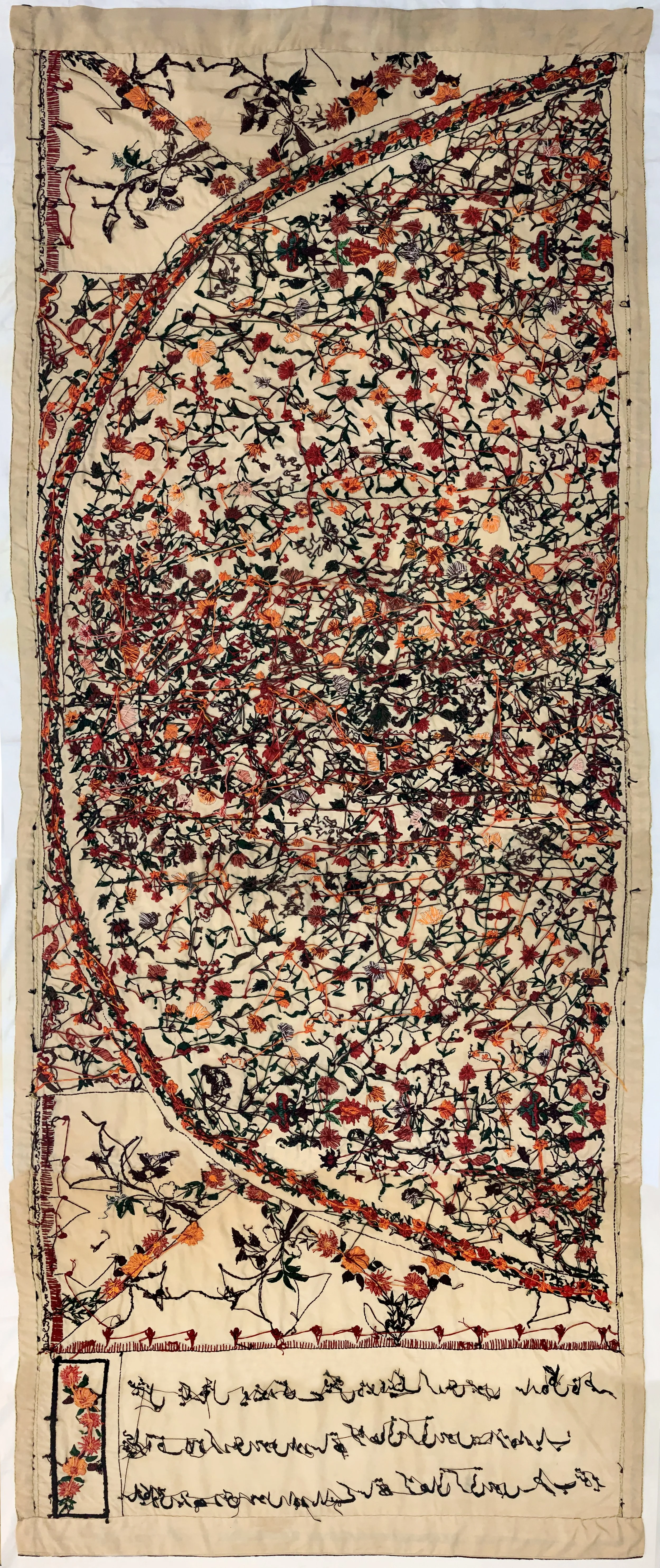
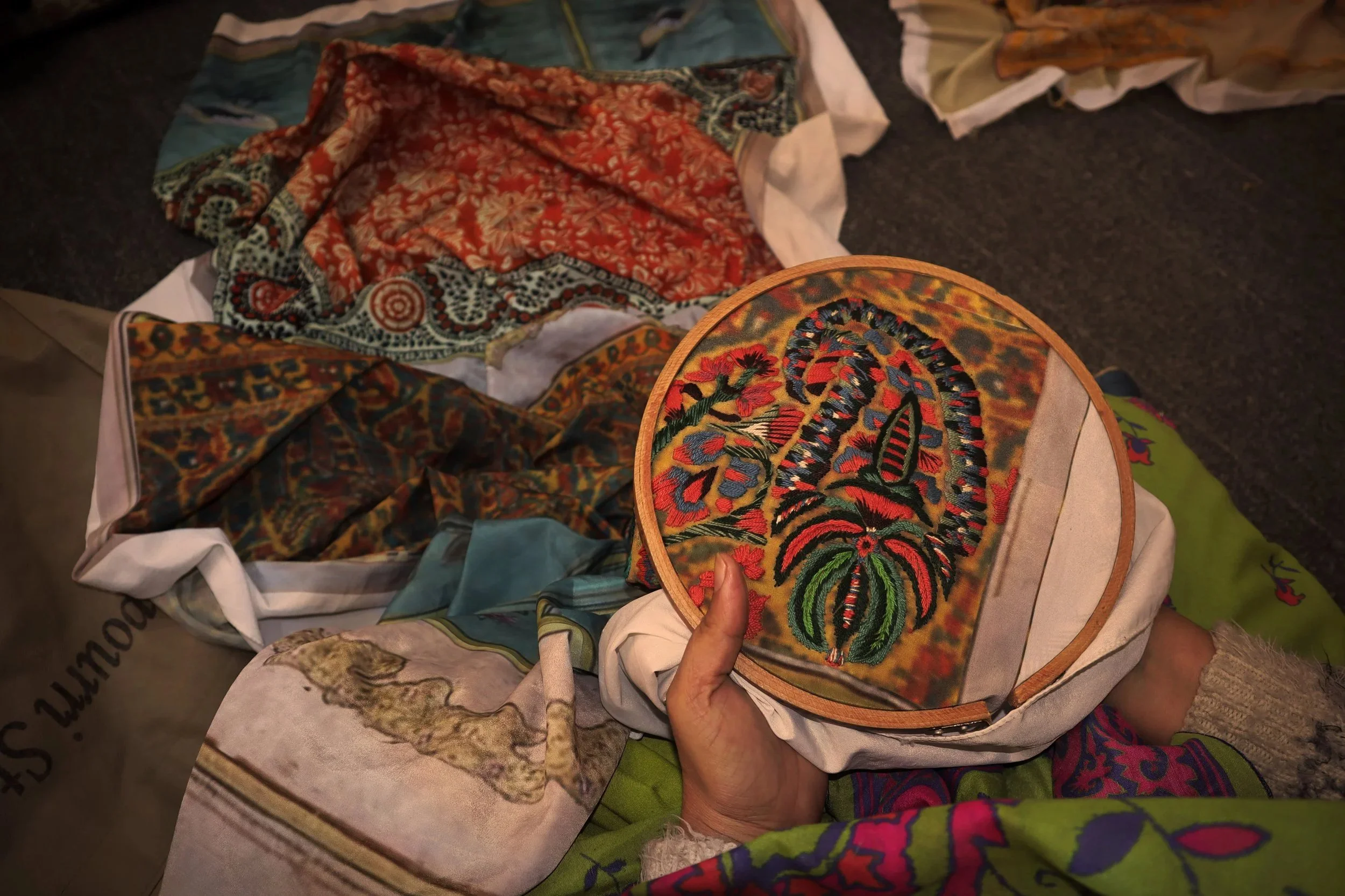
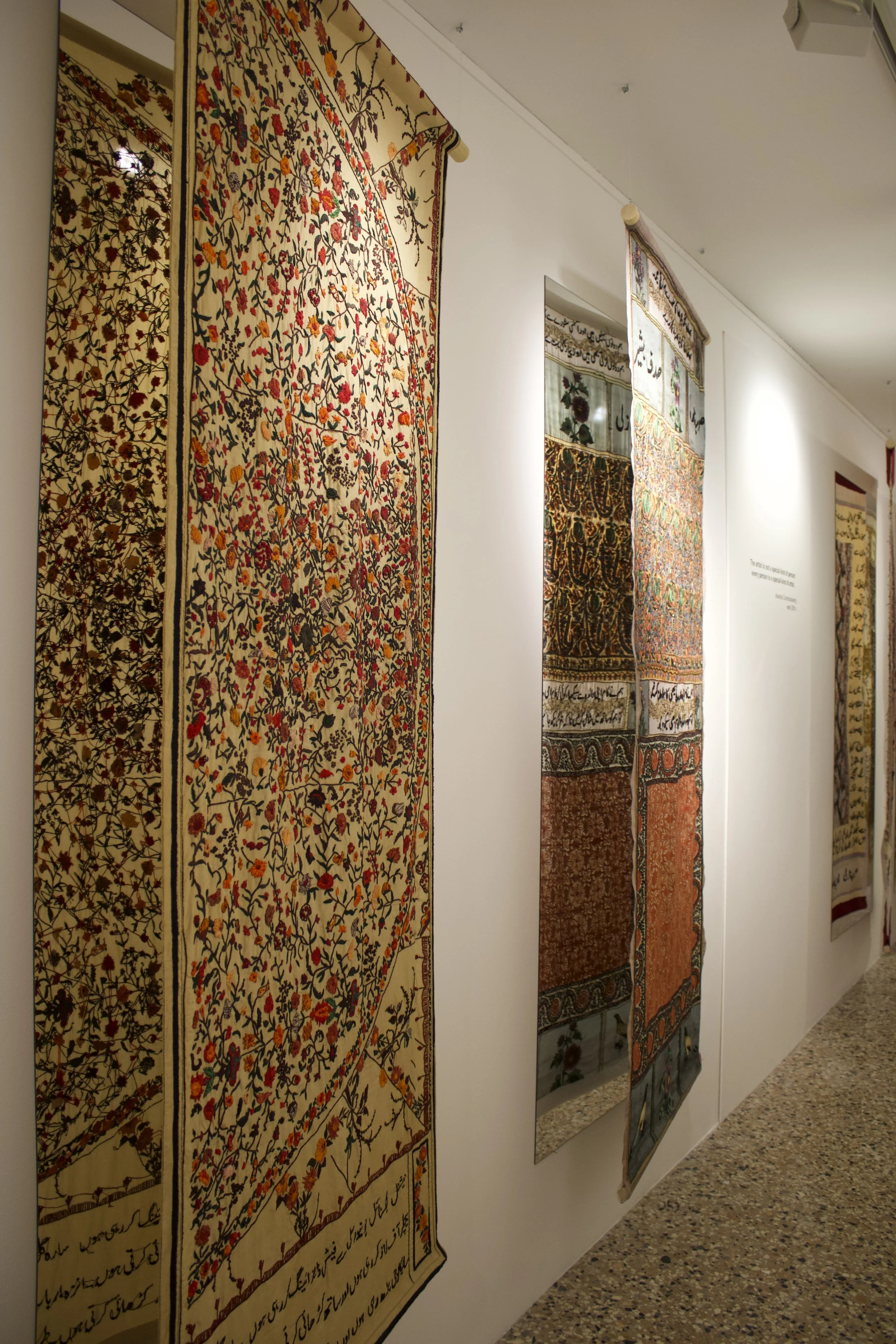
Tanka Tales: Thread as Archive is a transnational, research-based textile installation that examines craft, memory, borders, and material culture through Punjabi embroidery traditions. The project approaches embroidery as a living archive of memory, women’s labor, and cultural transmission, foregrounding hand stitching as both visual language and narrative structure through which personal histories and collective memory are encoded, preserved, and reimagined. Each embroidered work functions as a fragment, a tanka, an Urdu word that literally means stitch and figuratively suggests repair. These fragments accumulate into a nonlinear archive that unfolds through repetition, gesture, and embodied labor.
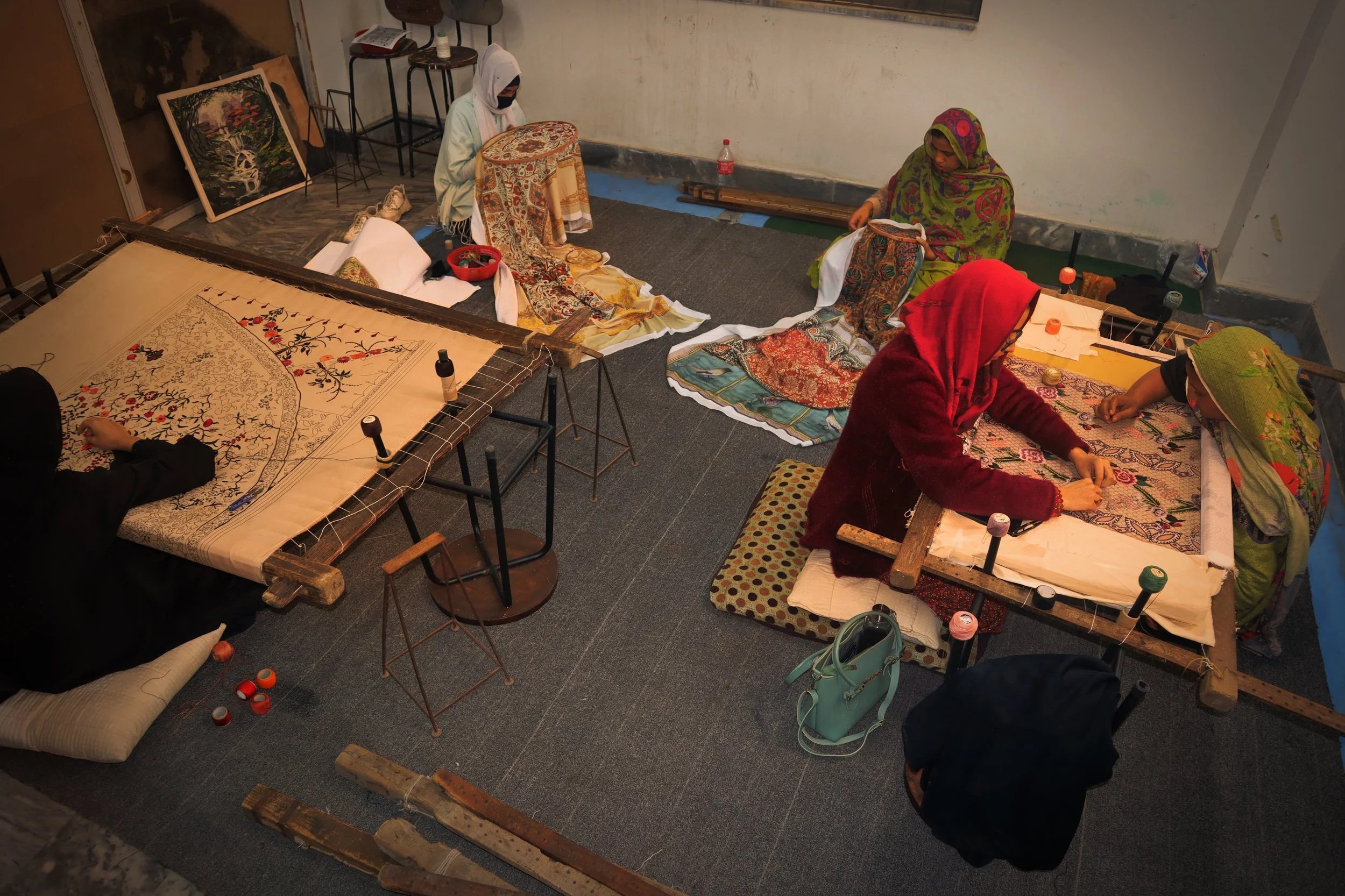
Engaging regional hand embroidery practices historically sustained by women, the project presents embroidery as both adornment and a record of lived experience, care, and community memory. Through close collaboration with Pakistani women artisans, these traditions are documented and revitalized while being situated within a contemporary art framework. The visual compositions draw from textiles held in Western Massachusetts museum collections, allowing traditional forms to be reinterpreted and reactivated across geographies and time.
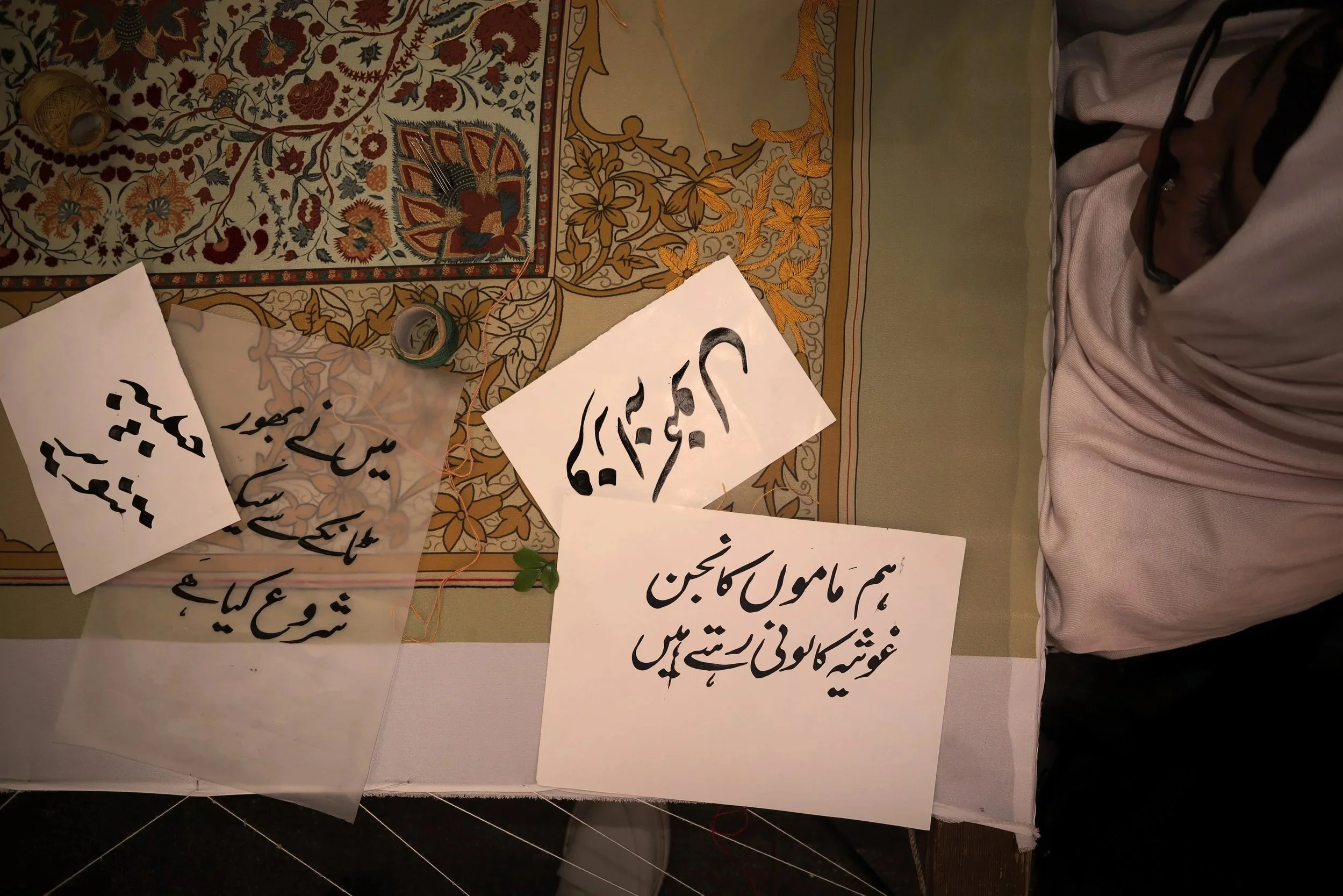
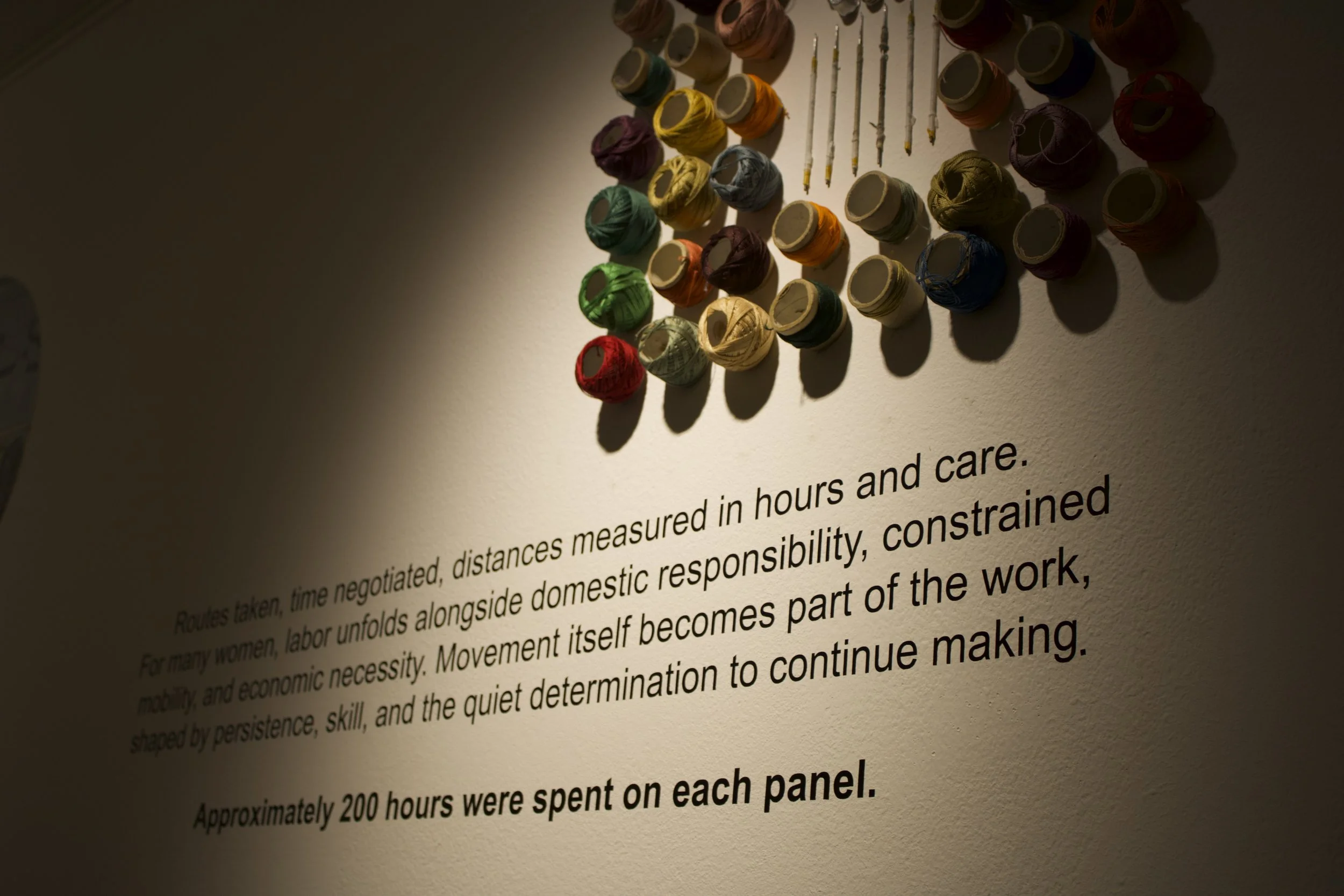
Techniques including Phulkari, Kacha tanka, Moti tanka, and Sheesha kari are preserved and reimagined, with artisans contributing words and personal narratives that are stitched directly into the work. Text and thread become inseparable, embedded within the surface rather than applied to it. Conceived in the spirit of Indian miniature painting, the textiles are transformed from wearable objects into painterly surfaces where design, pattern, and the maker’s story coexist. Through sustained engagement with the labor of making, the installation emphasizes the temporal, embodied, and relational dimensions of craft, forming a collective narrative that connects past and present across cultural boundaries.
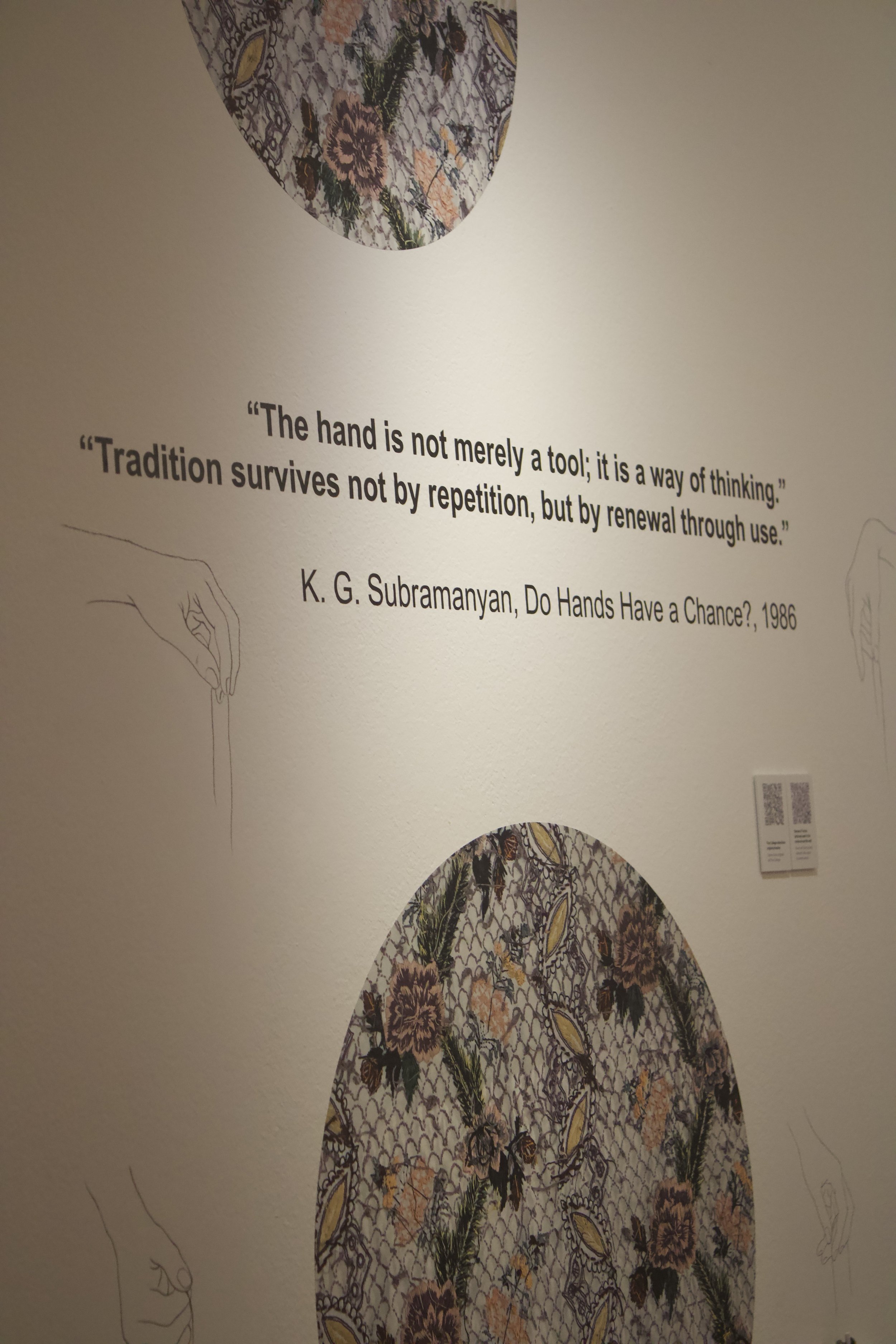
Installation views at European Cultural Center, Venice, Italy
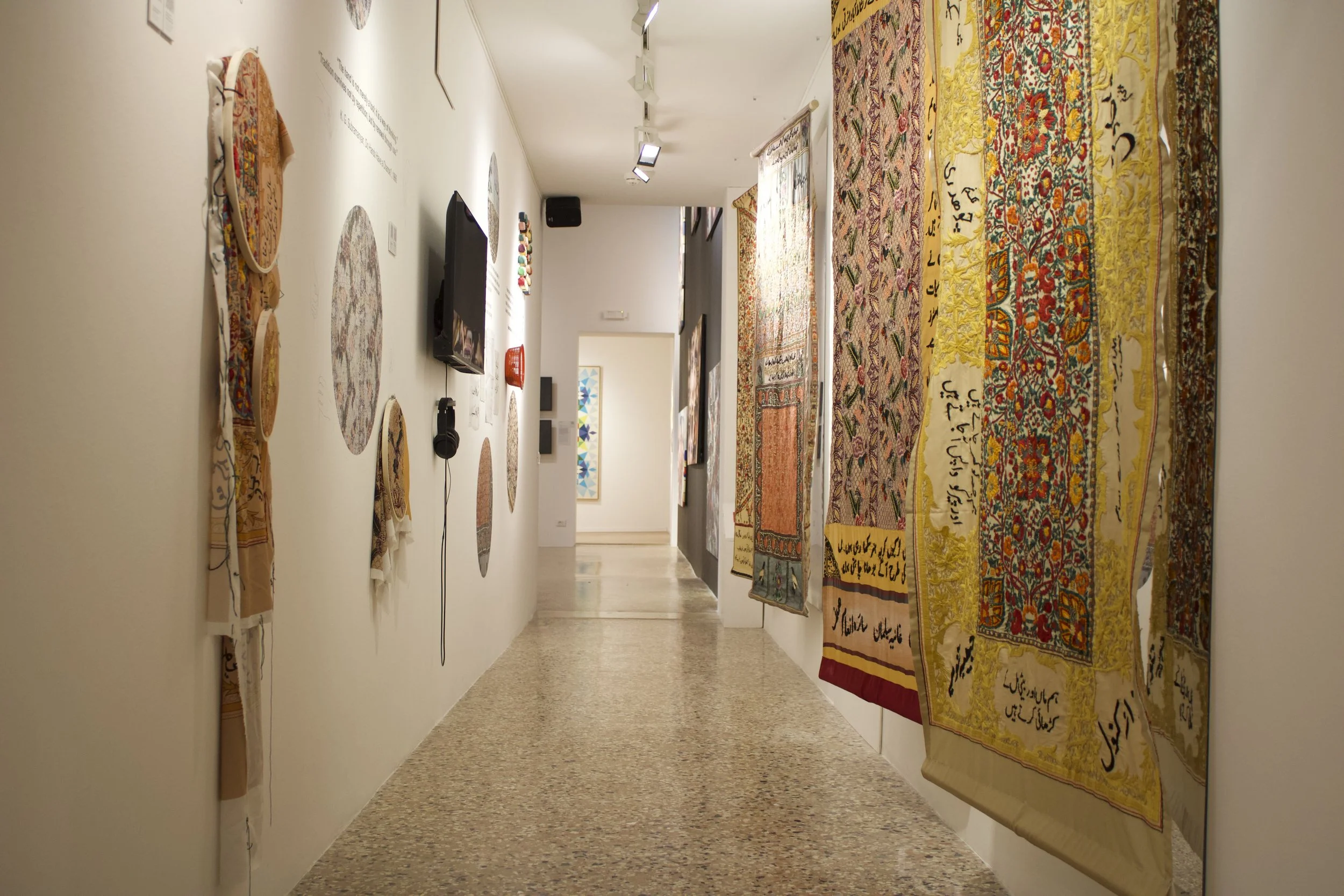
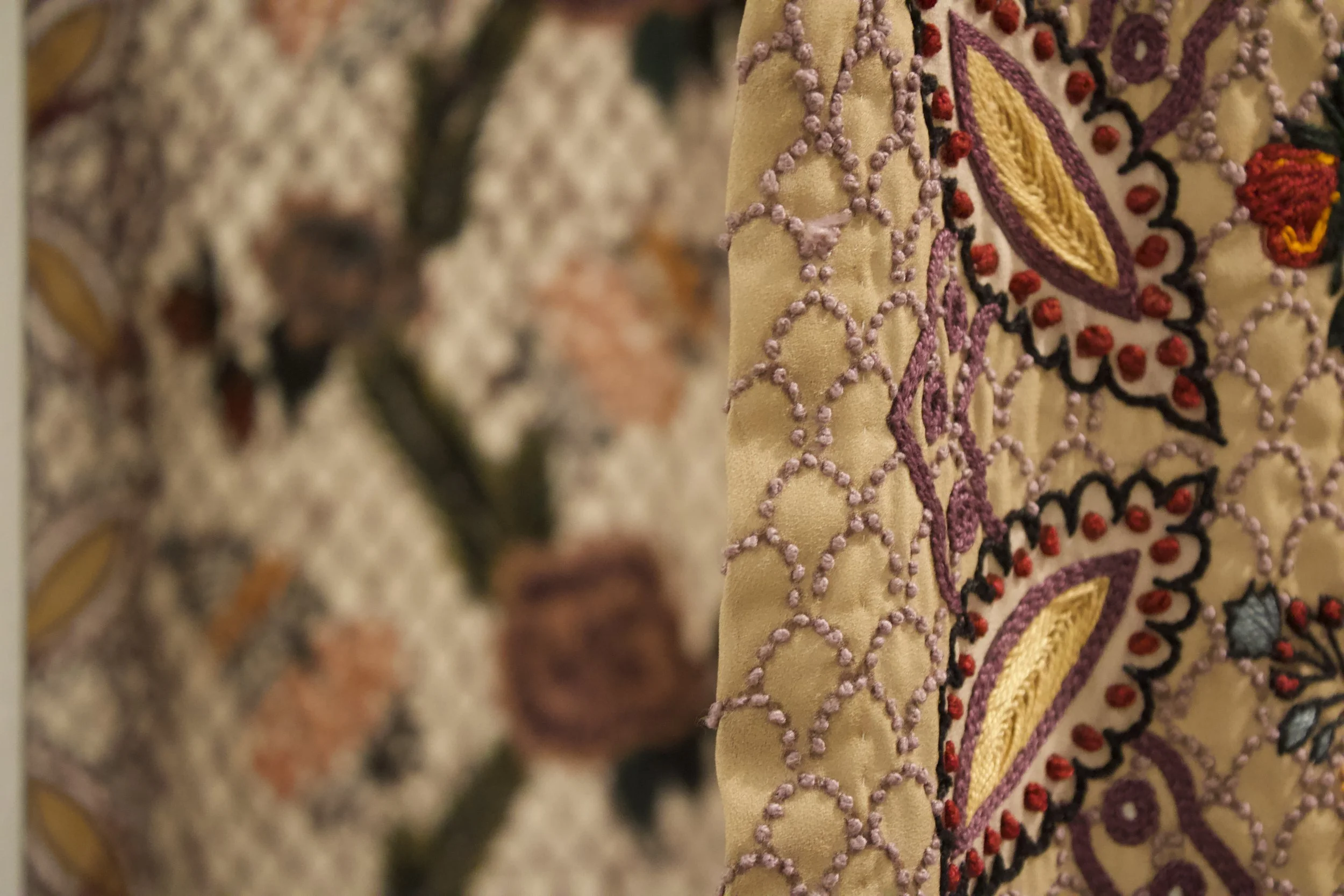
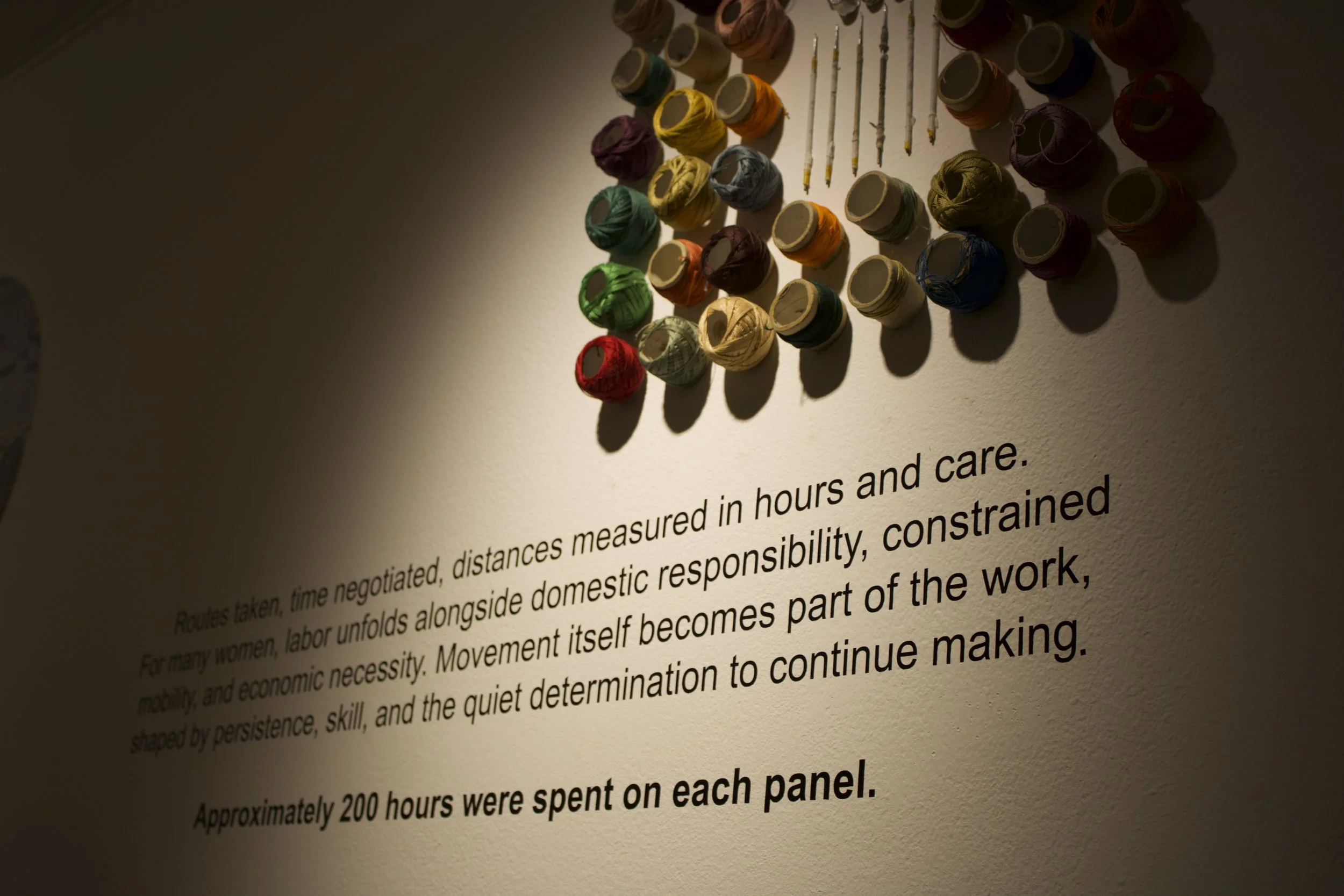
Backside of each panel